What the Duck Am I Doing SVG: The Design Asset for Relatable Chaos
A Visual Sigh of Relief for the Overwhelmed
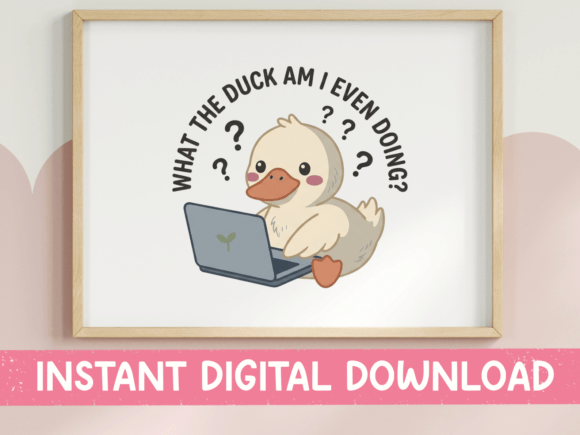
There’s a specific feeling that hits around 2 PM on a Tuesday. The coffee has worn off, the to-do list has somehow grown, and your brain feels like it’s buffering. This universal moment of professional and personal bewilderment is exactly what the What the Duck Am I Doing SVG captures. It’s more than a design file; it’s a visual representation of modern struggle. The core illustration is disarmingly simple and effective: a round, kawaii-style duck, hunched over a laptop, surrounded by floating question marks. Its posture isn’t one of anger or defeat, but of profound, relatable confusion. Curving above this scene in bold, dark lettering is the phrase, “What the Duck Am I Even Doing?” It’s a honest, slightly humorous admission that resonates deeply with remote workers staring at endless Zoom tabs, students buried in research, and anyone who’s ever felt their cognitive load exceed capacity.
This isn’t a generic motivational quote or a sterile corporate graphic. The What the Duck Am I Doing SVG has a distinct personality. It’s self-aware, empathetic, and a little bit cheeky. The kawaii aesthetic softens the message, making it approachable rather than negative. The bold typography ensures the statement is clear and unapologetic. This combination creates a powerful piece of creative font and illustration synergy that functions as a badge of honor for the overwhelmed. It’s a design that says, “I see you, I am you, and it’s okay.” For designers and creators, this emotional punch is what makes it a valuable design asset, not just a cute duck.
Where This Design Truly Shines: Practical Applications
The true test of any graphic asset is its versatility. The What the Duck Am I Doing SVG excels because its message is universally understood, making it suitable for a surprisingly wide range of projects. As a display font paired with a compelling illustration, it’s built to grab attention and convey an immediate feeling. Let’s break down where it works best.
For Personal Branding and Merchandise: This is where the design finds its most natural home. Think beyond a simple laptop sticker. It’s perfect for packaging design for a small business owner who values authenticity—imagine this on a mailer for an Etsy shop selling planner supplies or cozy work-from-home apparel. It makes an excellent tote bag for carrying laptops and notebooks to a coffee shop, or a mug that becomes a desk companion. The SVG file ensures crisp cuts for vinyl decals on water bottles, while the high-resolution PNG file is ideal for sublimation on shirts and pillows. It’s a commercial font and graphic combo that sells because it sells a feeling, not just a product.
In Digital Content and Marketing: For bloggers, content creators, and social media managers, this asset is a secret weapon for engagement. A post or story featuring this graphic can punctuate a blog about productivity struggles, a newsletter about creative blocks, or a social media series on “keeping it real” as an entrepreneur. In web design, it could be used sparingly as a section header for a blog category like “Behind the Scenes” or “Real Talk.” It adds a layer of human personality to a brand’s brand identity, showing that the people behind the logo understand their audience’s daily grind. It’s far more effective than a stock photo of a person looking “stressed” at a computer.
For Print and Editorial Projects: In editorial design, the phrase and illustration could serve as a compelling pull-quote or a chapter header in a book about creative entrepreneurship. For a magazine or zine focused on remote work culture, it could be a recurring thematic element. The bold lettering ensures it holds its own in print layouts, maintaining visual hierarchy without relying on complex serif font or sans serif font pairings in that specific instance. It’s a standalone statement.
Integrating the Asset: A Practical Guide
Acquiring the What the Duck Am I Doing SVG is straightforward—it’s an instant digital download. Once purchased, you have immediate access to both the SVG and PNG files. No shipping, no waiting. But how do you best use it? Here’s some practical guidance.
Evaluate Fit and Context: First, assess if the tone aligns with your project. This design has a casual, humorous, and slightly self-deprecating vibe. It’s perfect for personal projects, brands targeting millennials and Gen Z, or businesses with a relaxed, authentic voice. It might be less suitable for a formal corporate report or a luxury law firm’s website, but it could be perfect for the internal team swag of that same firm. Context is everything.
Test Font Pairings and Composition: While the “What the Duck” phrase is integral to the graphic, you might want to add supporting text. The bold, rounded lettering of the main phrase pairs well with clean, simple modern typography. Try combining it with a legible sans serif font for body copy or a simple script font for a name or date if you’re personalizing a gift. Avoid pairing it with other highly decorative or handwritten font styles, as it will create visual clutter. Let the asset be the star.
Consider Readability and Scaling: The SVG format is your best friend here. Because it’s fully scalable, you can resize it from a tiny icon to a large banner without losing quality. When using the PNG, ensure you’re working with the high-resolution version for print projects to avoid pixelation. For digital use, the transparent background makes layering over photos, patterns, or solid colors seamless.
Leverage the Emotional Connection: Ultimately, the power of this asset lies in its ability to create an instant bond with your audience. When you use it on a product, in a social media post, or as part of your branding, you’re not just selling a service or an item. You’re acknowledging a shared human experience. That builds brand perception that is authentic, relatable, and memorable. It turns a moment of confusion into a point of connection, and that is a powerful tool in any creative’s arsenal.